Hidden Information Labs Institute studies how the structure of a network shapes cognition, behaviour, and collective outcomes. What spreads and what stalls. How closure hardens into an echo chamber. How fragmented information in health and economic systems produces failures that nobody inside the system chose.
A position in a network places demands on whoever occupies it and forecloses options they never declined. The institute calls the first structural load and the second structural unfreedom. Both are properties of the arrangement, both can be measured, and neither is visible to the person carrying them, which is why the cost usually becomes legible at the moment it can no longer be priced.
The same person performs differently in different network positions. Outcomes are treated as a property of structure first. The question is never who someone is, but where they stand.
A tie has direction, weight, and a channel that carries information, work, or access. These quantities can be mapped, audited, and changed. Constraint is a number, not a feeling.
Systems break when a channel degrades and can no longer carry the right information to the right place. Repair happens at the edges. A second path turns a load-bearing node into an ordinary one.
From a single ego network to a national health system, the object of study is the same object: a graph, its topology, and what that topology does to the people standing inside it. Each programme states the mechanism it is testing and the literature it argues with.
Adoption depends on the shape of the network carrying it. Behaviours that need reinforcement from several sources move through clustered structure and die in sparse structure. Falsehood moves through cascades faster and further than correction does. The programme tracks which topologies carry which kinds of contagion, and which trends are artefacts of the graph they travelled through.
Centola 2010, Science · Vosoughi, Roy and Aral 2018, Science · Granovetter 1973, AJS
An echo chamber is a measurable property of an ego network: high constraint, redundant ties, few independent paths to information the position cannot already reach. Exposure to opposing views inside such a structure has been shown to harden the position it was meant to open. The programme treats belief closure as a topological state with a number attached.
Burt 1992, Structural Holes · Bail et al. 2018, PNAS · Coleman 1988, AJS
A patient's care is delivered by a network of clinicians who share the patient and, frequently, nothing else. Patient-sharing networks reconstructed from administrative records vary widely in structure across regions, and the gaps between providers are where information about a person stops arriving. The programme asks what fragmentation costs and who absorbs the cost.
Landon et al. 2012, JAMA · Barnett et al. 2011, Health Services Research
Power is a property of the relation and not of the parties inside it. Where alternatives are absent on one side, the exchange is priced by structure before anyone opens their mouth. The programme measures asymmetric dependence in professional and economic networks, and the options it forecloses for the party with fewer paths out.
Emerson 1962, ASR · Burt 1992 · Simmel 1908, trans. Wolff 1950
The theoretical core of the institute: coerced adoption across network topologies. When a position leaves no alternative, the choice made inside it was never a choice, and treating it as one misreads the system as a failure of the person. The paper formalises the measure and states the conditions under which it applies.
Emerson 1962 · Ostrom 1990 · Meadows 2008
Papers will be listed here as they are published.
Conversations with the researchers, investors, entrepreneurs, and artists shaping culture, mapped as a network of the ties between them. Hosted by Dr. Anna Maria Matziorinis.
Each node is a guest, each edge a shared idea or relationship. Explore the graph, tap any node, and listen to the episode there.
Listen to the podcastDr. Matziorinis founded Hidden Information Labs Institute after years of research reconstructing brain networks from diffusion imaging and analysing their topology. Studying connectivity through graph theory gave her a direct view of what happens when any network degrades: the nodes remain, the edges thin, information stops arriving where it is needed, and the system loses coherence long before anyone can name what went wrong. That neuroimaging work continues separately, as a visiting scholar at the University of Bergen.
The same structural logic holds at other scales. The institute extends that work to social, professional, and institutional networks, publishing research and teaching the method to the people whose systems depend on it.
"Never doubt that a small group of thoughtful, committed people can change the world. Indeed, it is the only thing that ever has." Margaret Mead.
Hidden Information Labs Institute
Ipsa scientia potestas estKnowledge itself is power · Francis Bacon, 1597
Hidden Information Labs Institute studies the structure of networks and what that structure does to the people and institutions inside it. The organising question is a single one: what does structure make impossible, and for whom?
A position in a network places demands on whoever occupies it, and forecloses options they never declined. We call the first structural load and the second structural unfreedom. Both are properties of the arrangement rather than of the person standing in it. Both are measurable. Neither is visible to the person carrying them, which is why the cost usually becomes legible at the moment it can no longer be priced.
The principle holds at every scale the institute studies. A trend that spreads through one network and dies in another. A belief that hardens because the position holding it has no independent path to anything else. A patient whose care is split across clinicians who share the patient and no information. A firm whose succession risk sits in a position rather than in a job title. In each case the failure sits in the connective architecture, which is why it survives the departure of any individual and reappears in whoever takes the seat.
The institute's work draws on network science (Burt, Granovetter, Freeman, Coleman, Barabási), classical sociology (Simmel, Emerson, Obstfeld), systems thinking (Ostrom, Meadows), dynamical systems (Strogatz), and information theory (Shannon). It applies these to social, professional, and institutional networks, and it makes claims about arrangements rather than about the interior lives of the people inside them.
The institute publishes applied papers and teaches the method to the practices and systems that depend on it.
HILI gives monthly to reforestation and forest network research in Canada and internationally: the Mother Tree Project at the University of British Columbia and The Grove (One Tree Planted). Networks operate across scales, from neural and professional systems to mycorrhizal and ecological ones, and that research is structurally adjacent to what the institute studies.
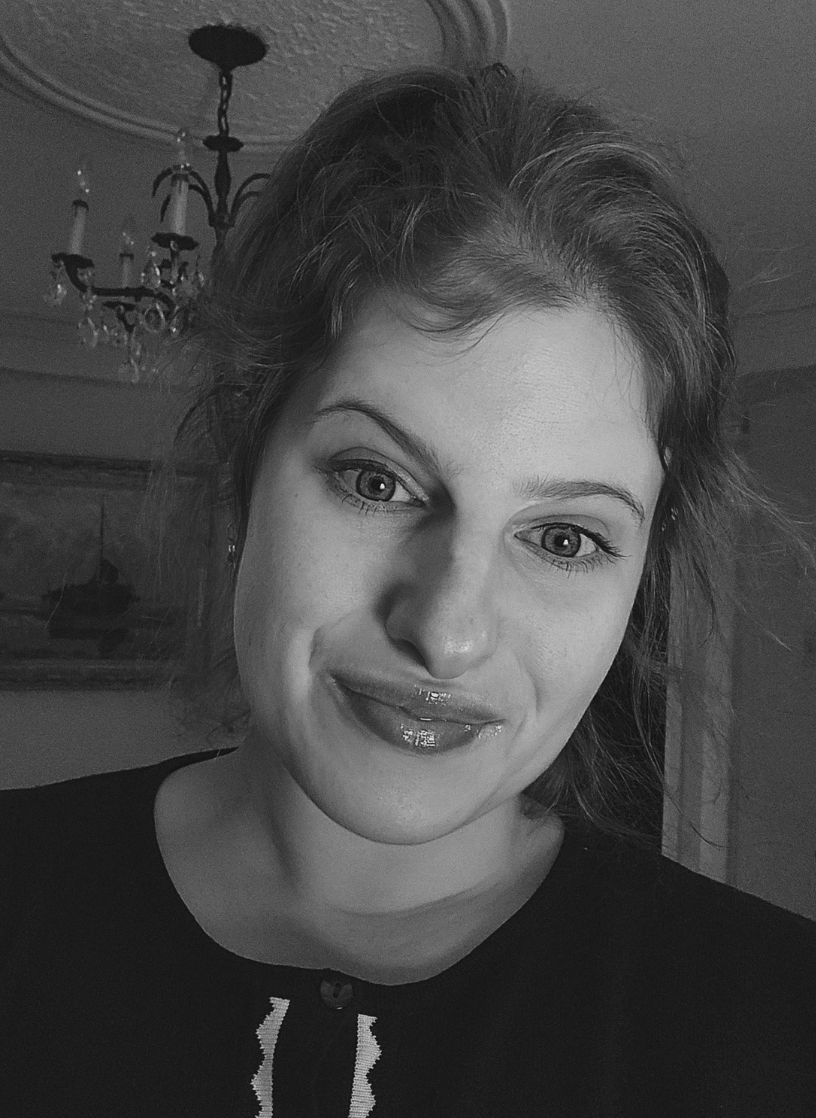
Dr. Anna Maria Matziorinis
Dr. Anna Maria Matziorinis is the founder and director of Hidden Information Labs Institute and a visiting scholar at the University of Bergen in Norway. Her research at Bergen reconstructed brain networks from diffusion imaging and analysed their topology along the Alzheimer's continuum, extending into persistent homology and network science. That work sits with the university and is separate from the institute.
Years of recovering structure from partial signal gave her a direct view of what happens when a network degrades: the nodes remain, the edges thin, information stops arriving where it is needed, and the system loses coherence from within. The damage is architectural before it is visible.
That perspective became the foundation of her current work, which studies structure that cannot be observed directly and what it costs the people standing inside it, across social, professional, and institutional networks.
Research dispatches
New research from the institute, and papers as they are published. Sent when there is something worth saying.